
Showing posts with label morrison. Show all posts
Showing posts with label morrison. Show all posts
Monday, August 10, 2009

Monday, June 08, 2009
Review: Seaguy: Slaves of Mickey Eye #3
 In the history of my CBR reviewery (and I've written well over 300 reviews in the past 15 months), I've only given the coveted five-star review three times. "Casanova" #14 got the perfect score. So did "All-Star Superman" #10. Now, another comic has joined that elite rank: "Seaguy: Slaves of Mickey Eye" #3. Man, did I really like this comic.
You should read the heck out of the whole series and then eagerly anticipate the final three issue mini which, according to Cameron Stewart, we can expect in the summer of 2010!
Saturday, June 06, 2009
Batman and Robin and Seaguy Hit THE SPLASH PAGE
 Chad Nevett and I couldn't resist talking about Grant Morrison comics when two of them shipped on the same day. So that's what we did:
Chad Nevett: Oh my god, we're discussing Grant Morrison again! What a surprise! I am so shocked! This never happens! Ever! Seriously! Er... so... yeah... "Batman and Robin" #1 and "Seaguy" #3. Want to kick things off, Tim?
Tim Callahan: "Batman and Robin" #1? Oh, did that come out?
Honestly, I haven't been anticipating a comic this much since "Final Crisis" #7, how about you?
The first thing that pops to mind is, "yeah, had Quitely drawn all of Morrison's 'Batman' run, our brains would not have been able to handle the awesomeness." Boy, is he the perfect guy to take this Morrisonian weirdness and make it sing. And, yeah, this issue immediately renders all of "Battle for the Cowl" moot, filling in just enough plot details to get everyone up to speed, and then jumping right into the action. This is definitely a much more accessible Morrison Batman comic, with very little in the way of subtext beyond the Dick/Damian relationship and the new strangeness descending on Gotham in the absence of Bruce Wayne. But Morrison's "Batman" run started out simple too, with a Man-Bat Ninja attack and the introduction of his hitherto-unknown son. I think people forget that when they complain about the dense and indecipherable earlier Morrison Batman comics (which, as we both know, were slightly dense but hardly indecipherable). Still, this is a "Batman and Robin" comic for everyone to enjoy. I didn't even miss Jamie Grant's colors as much as I thought I would -- Alex Sinclair does a nice, bold job with the color palatte here, and perhaps Grant would have made it too ephemeral for a Batman comic (although I probably shouldn't assume that, since a pro like Grant would have changed his approach to suit this series).
As much as I liked "Batman and Robin" #1, I think I prefered "Seaguy" #3, though. "Batman and Robin" #1 was great and all, but it seemed to be pretty much exactly what I expected going in -- based on the preview art and the interviews. I never know what to expect from "Seaguy," and this final issue (of the middle series) had it all: action, madness, thrills, nonsense, satire, and most of all, romance! I loved the heck out of this "Seaguy" series. What about you? "Batman and Robin" #1 or "Seaguy" #3? What takes the Nevett Award for Best Morrison Comic of Early June?
CN: Yeah, "Seaguy" was the better comic. I was looking forward to "Batman and Robin" more, but "Seaguy" is just too damn good for a lighter superhero book to really match up. And "Batman and Robin" is very much a light superhero book -- a very good one, but, in many ways, I don't think it quite matches up to what Morrison did up until this point on "Batman." As you said, it's very superficial and lacking in subtext, which is fine and good, but a book like that is always going to look inferior next to one that is so rich and deep like "Seaguy." I love both, but one is going to get reread this weekend and the other isn't.
Actually, there's something about "Batman and Robin" that felt off for me. I didn't mention it in my review of the issue, because I was going for something a bit more objective -- and because I haven't been able to figure out what feels off yet. Maybe it's the lack of subtext. In many ways, this comic feels too easy, too self-explanatory. Too unchallenging. One of the things that we've loved about Morrison's "Batman" run has been that it demands that the reader step up and engage the comic in a far more active way than he or she usually would. Now, maybe we'll discover later that there really was tons of stuff going on here -- because, as you said, Morrison's "Batman" run began similarly -- but, I was maybe just expecting more. That said, "Batman and Robin" is a very smart, well-executed comic that reads briskly. I don't think it's as groundshaking as others have said, but it's a very strong start to this book and this new dynamic duo. Are you missing the subtext like I am?
To Be Continued at GraphiContent!
To Be Continued at GraphiContent!
Thursday, June 04, 2009
Batman and Robin #1 Annotations
 Like my previous annotations/commentary on Morrison's Batman, this is not so much a scholarly look at a comic book page-by-page as it is me making fun of stuff and/or pointing out what I notice. I may point you in directions you hadn't yet considered, but I would never guarantee anything that foolish.
Batman and Robin #1 Annotations
Cover: I'm not a huge fan of the "Battle of the Planets" Batmobile, but I'm sure it will grow on me as it continues to fly through Gotham and blow stuff up. I do like the utter simplicity of Quitely's Batman design -- classic, yet with a bit of weight in the boots to show this well-grounded Dick Grayson incarnation. I also like the return of the green on the Robin costume, as if Damian insisted "hey, Neal Adams, man! We can't just throw out his design!" and I like the Doc Martens, because Damian Wayne does not wear slippers (in fact, that's the subtitle of the next Robin spin-off miniseries). The best bit of the Robin costume is the black hood on top of the yellow cape because Damian doesn't care about fashion rules. He'll put a damn hood of a different color on top of a a damn yellow cape anytime he wants. He was raised by ninja assassins. Were you?
Page 1: Mr. Toad. Note that "Mr. Toad's Wild Ride" isn't actually a ride at Disney World anymore. Instead you can journey through a lame, and pointlessly bouncy, tour of Winne the Pooh's house. Perhaps Morrison's anger at this switch led to the Mickey Eye thing in "Seaguy."
Pages 2-3: Flying Batmobile vs. old-timey car.
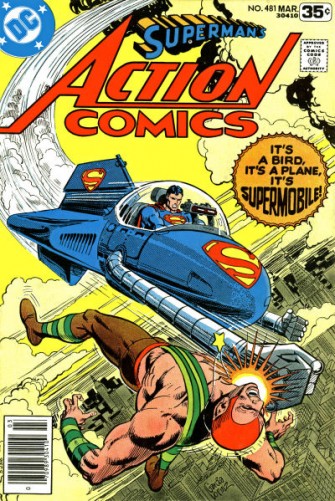
Pages 4-5: I imagine Batman says "I'm sorry I ever doubted you, Damian" in the tone of a middle school basketball coach, trying his best to be patient and supportive, but really wanting to tell the other kids to beat the little punk up after practice. This Batmobile shoots rockets that go boom.
Pages 6-7: "Never use real names in the field" is code for: "the exposition's over, pal, so start talking like these readers have actually read 'Battle for the Cowl' (even though we're as surprised as anyone that they actually did)." This Batmobile also has grappling powers. All it needs is a pair of metal fists. And Mr. Toad speaks like a carnie.
Pages 8-9: The double punch is a strategy employed heavily in the "Batman" television show from the 1960s, which is the feeling Morrison is apparently aiming for here. No sound effects, though, because that wouldn't make this panel ironic, it would just make it silly. Dominoes are also known as "bones" because doctors, aka "sawbones" used to get paid in dominoes (okay, that is probably not true at all). Does anyone draw gloves better than Frank Quitely? The answer is no.
Pages 10-11: The two pages that render all of "Battle of the Cowl" and its tie-ins completely irrelevant. Good. Also: Batman's grave, but nothing is written on it! Could it be that he's not really dead? Perhaps that final page at the end of "Final Crisis" #7 that showed Bruce Wayne alive in a caveman cave meant that Bruce Wayne is not, in fact, dead but rather alive in a caveman cave.
Page 12: See, I told you dominoes were called bones! Also, this page is a complete rip-off of Chris Ware's "Building Stories" and he should probably sue.
Page 13: The exposition ain't done yet, it turns out. But a European circus performer? That's menacing. And, no, eating chicken and jalapeno sandwiches don't make you a badass, Dick Grayson, as Damian is quick to prove.
Page 14: Who says, "crime is doomed"? Dick Grayson, right? He is turning into the sarcastic middle school basketball coach already. Also, Damian should drop a League of Assassins reference in every conversation. "So, did you catch the 'Lost' season finale?" "No, because I was raised by the masters of my mother's League of Assassins." "Do you like jalapeno sandwiches, with chicken?" "Dick Grayson, I will cut out your pansy tongue with a machete I carved from the spine of Charles Manson as I was taught by the masters of my mother's League of Assassins." Etc.
Pages 15-16: Disrespectful brats always talk about other people having to "earn" their respect. The "Tim Drake" line really puts Damian in his place, though. Dick Grayson may get promoted to junior varsity b-ball coach before this issue is over. Also, Pyg's doll gals are creepy. Pyg and his dolls appeared way back in "Batman" #666, remember that one? The one that was an "alternate future" where Damian was Batman? The one that seems less and less like an alternate future and more and more like what could really happen if Morrison stayed on this comic long enough? That was a good issue, wasn't it? This art is way better.
Pages 17-18: I know it's expressionistic and I understand foreshortening, but Frank Quitely's Batman can reach down and grab hold of his kneecaps without even bending over. His arms must have stretched after all those years of swinging around Gotham. I do like how Robin is bigger and in the foreground. This is the "Robin and Batman" series at this point. Grayson needs to step up and smack the little brat with those baboon arms of his.
Pages 19-20: That guy with the flaming skull? It's not the Flaming Skull. (He's Phosphorus Rex.)
Pages 21-22: Pyg is apparently not a professor yet. He's got a whole Leatherface thing going on here, which is pretty terrifying actually. And the acid mask gag? Didn't the Black Mask used to do something like that? Anyway, things look bleak for Niko and family. I don't think Robin will care too much about saving them. He was raised by assassins.
Page 23: I don't know if that's Jason Todd or not, but in that single panel, he looks cooler than he does in every previous appearance combined. Also: Dr. Hurt returns and he's got the keys to a building that's been blown up. Why is he all braggy about it? Because he's Satan, that's why! Or he's Bruce Wayne's father, that's why! Neither of which were raised by any sort of assassins, as far as I know.
No obscure 1950's "Batman" comics to reference this month? Maybe I'll drop this series and see what Winick's got going on.
Morrison and Quitely!!!
Thursday, May 28, 2009
When Words Collide: Best and Worst of Morrison
 Do I dare to make a Top Five Worst Grant Morrison Comics list? Indeed I do!
Will I relent to the unyielding attacks by the pro-"DC 1,000,000" readers? Never!
Do I also provide a Ten Best list? Of course.
I don't hate any of these Morrison comics, but something has to be the worst, and it's these five.
Check out the lists in this week's "When Words Collide," see me superficially try to explain my position in 2,000 words, and then come back here to tell me your Top 10/Bottom 5 of Grant Morrison. I dare you!
UPDATE: Bill Reed fires a counter-attack at CSBG!
Wednesday, March 25, 2009
When Words Collide: The Invisibles
 What's that now? You're SHOCKED to find that I've written about a Grant Morrison comic? I know, it's hard to believe.
Anyway, the Morrison series that broke my will to write the sequel to "Grant Morrison: The Early Years" is now up for discussion in this week's "When Words Collide."
Thrill to my idiotic attempts to read everything that influenced Morrison.
Marvel at my ability to give up and move on to Lightning Lad and Triplicate Girl.
Speculate on everything I got wrong in my overly simplistic explanation of what "The Invisibles" means to me.
Check it out: Me on "The Invisibles."
Tuesday, March 10, 2009
Morrison and Quitely's "Batman and Robin"

Though DC is being coy (not really very successfully coy, but pretending to be coy at least) with this week's DC Nation page, this is pretty obviously a preview of the Grant Morrison/Frank Quitely "Batman and Robin" comic, and though it's sometimes hard to tell with Quitely, that looks pretty much like how I'd imagine he'd draw Damian as Robin.
But who's behind that Batman mask?
The smart money is on Thomas Wayne, Owlman! (Just kidding. I really can't imagine it would be anyone other than Dick Grayson.)
OR, this series could just be an unofficial "All-Star" take on the characters, with Bruce and Dick's adventures in the past. Check out those retro vehicles!
Wednesday, February 25, 2009
Batman R.I.P.: The Deluxe Edition Review
 Recently reviewed by me at CBR: Batman R.I.P.: The Deluxe Edition, about which I write the following sentences: "But this is still a book worth reading, largely because what it loses in internet-speculation context, it gains in distance from Morrison's own promises. Many readers were annoyed, even angry, by the lack of clear resolution in the final chapter of 'R.I.P.' Here, in this isolated, hardcover context, the final chapter works much better. It's still not a conclusive finale to the larger question of Dr. Hurt's identity, but such a conclusion isn't promised within the book's pages. What's promised within its pages, implicitly, is a resolution to the Batman-gets-broken-mentally storyline. And that does, indeed, resolve, with a mentally-shattered Batman rising up from his own staged death -- as he literally smashes out of his own coffin -- and turning the tables on his enemies. It's a good Batman story, with betrayals and counter-betrayals, with a bravura performance from the Joker, and with enough unique visual concepts (the garish Zur-En-Arrh costume, Bat-Mite, the Club of Villains) to make the story rise well above the fair-to-middling morass of Batman collected editions."
Read the entire review HERE.
Friday, February 20, 2009
Grant Morrison's Superman Saga: Part III
 After nearly 10,000 words, my tour through Grant Morrison's Superman Saga comes to an end with the release of Part III on CBR.
All the pieces don't fit together perfectly, but there's little doubt that Morrison's Superman increases in strength -- both moral and physical -- as he progresses, and there's an overall character arc that culminates in "All-Star Superman" and gets an epilogue in "DC One Million."
Morrison spends far more time on Superman's later years than his earlier ones, perhaps not surprisingly, since Superman was around for over 20 years before Morrison was even born. But I think it's worth pointing out that when most writers step up to "redefine" a character -- to really make their mark -- they tend to give us a new origin story. Morrison doesn't do that with Superman. Make of that what you will.
Now, where did I put all those Morrison Batman comics?
Thursday, February 19, 2009
Grant Morrison's Superman Saga: Part II
 Part II of my exploration of "Grant Morrison's Superman Saga" is now posted at CBR. This one's pretty much all "JLA," all the time, as I put Superman's "middle years" into context and tell you what happens along the way.
Check it out -- it's a big entry.
(And the finale, in which I explore "Final Crisis" and "All-Star Superman" is even longer.)
Tuesday, February 17, 2009
Grant Morrison's Superman Saga: Part I
 Ever since I wrote my CBR column on the finale of "All-Star Superman," Andy Khouri has been chanting in my ear, "Morrison's Superman Timeline. Morrison's Superman Timeline." So rather than just list the stories, in order of continuity, that would make up an exclusively Morrison version of the Superman Saga, I'm taking everyone through a tour of Morrison's Superman Universe.
Basically, it works like this: If every Morrison Superman story counts, and it's all part of one larger story, what is that story?
I take you through it step-by-step this week in a three part series running at CBR. The first part was posted today, as I explore the events of "All-Star Superman" #6 through Morrison's work on the UK "Superman Annual" and onward through "Animal Man" and "Doom Patrol."
Check it out, and look for Part II later this week, with my focus on Superman's role in Morrison's "JLA" stories (tomorrow, maybe?).
Wednesday, February 04, 2009
The Final Crisis Dialogues: Final Crisis #7
 What was once the "Splash Page," the internet's #1 source for comic book chit-chat by Tim and Chad, has transformed into "The Final Crisis Dialogues" mostly because (a) Sequart.org is temporarily inactive, and (b) Chad and I have been talking "Final Crisis" for three weeks straight!
So join us for our lengthy dialogue on "Final Crisis" #7 and see some of the greatest pseudo-Splash Page moments ever: See me point out the flaws in "Final Crisis." See Chad deflect them with his mental Akido. See Chad mock the "Final Crisis" as poetry conceit, and see me take him on with prosaic fury. See us both talk "Seven Soldiers" with the wisdom of hermetic scholars. See all this and more!
And, really, if you haven't already, you should probably just read ALL of our "Final Crisis" dialogues, and see how right we were about everything, and how wrong we were about everything else.
Wednesday, January 28, 2009
When Words Collide: Final Crisis -- Here is Knowledge
 Thus, an era of comics-I-am-
eagerly-anticipating comes to a close. Now that "Final Crisis" is done, comic book shopping on Wednesdays seems to have lost its luster. The world is a little dimmer now, isn't it?
This week's "When Words Collide" was delayed because I wanted to tackle "Final Crisis" in its entirety, #7 included, and so I could hit my usual deadline of 5:00 PM on Tuesday night, unless Darkseid himself dropped off a copy of the last issue on his way back through time (clearly, he had other things to worry about, and I don't hold it against him). Then the snowstorm hit New England this morning, and that delayed my purchase of the issue even more. But I read it like crazy and ignored my family tonight, and submitted my column, "Final Crisis: Here is Knowledge" just in time to make Wednesday's CBR.
Actually, the CBR folks had to work a little overtime to get it posted, and that's just another example of how awesome they are.
So read my column, then come back here and tell me how wrong I am, and I will destroy you with the power of song.
Saturday, January 24, 2009
Superman Beyond #2 Hits THE SPLASH PAGE
 This week's "Splash Page" discussion begins on Chad Nevett's blog. Read that part first, then come back here for PART TWO:
Chad Nevett: How do you think this little tangent story works in relation to All-Star Superman? It seems to have some relationship, but where that book fell flat for me, this one really worked. Is there any relationship beyond the same writer and character?
Tim Callahan: There's certainly a parallel between All-Star and Superman Beyond, most emphatically on the final page of each series. In All-Star we get the promise that Superman will continue via Quintum's technology -- "Superman 2," which we know will lead to a future strain of Supermen, as seen in the appearance of the Superman Squad in issue #6 -- while in Superman Beyond we get the ultimate Superman epitaph: "To Be Continued." It all ties in to Morrison's constant articulation of the existence of Superman above and beyond our own mortal existence. The whole "Superman is realer than us" idea.
Plus, both series feature that moment of transcendent awareness where Superman realizes how everything fits together, but, ironically, in All-Star, the moment is one in which he realizes that "we are all there is" and there is no higher power or meaning above the deeds of humanity/superhumanity. In Superman Beyond, he not only recognizes the existence of a higher realm in the Bleed, but he senses the reader as well, as he feels our breath as we "cradle" the comic book in our hands. I think the difference between those two moments speak to the differences between the two series. All-Star is a sealed-system look at the Superman mythos and our universe exists inside that one -- we are the pocket universe inside Superman's Fortress. Superman is the ultimate example of goodness upon which our sense of right and wrong is based, or something along those lines. Superman Beyond is the DCU as a creation of our universe, and like Buddy Baker, Superman can only look up at us from inside his comic book reality, but he is always trapped within it. Of course, if we take Morrison's cosmology to its logical extreme, the DCU is a layer nestled inside our reality, and our reality is a layer nestled inside the DCU -- it's a physically impossible situation to be in, or it seems to be, but maybe that's because we lack the fifth-dimensional vision to see it properly.
Plus, both series feature that moment of transcendent awareness where Superman realizes how everything fits together, but, ironically, in All-Star, the moment is one in which he realizes that "we are all there is" and there is no higher power or meaning above the deeds of humanity/superhumanity. In Superman Beyond, he not only recognizes the existence of a higher realm in the Bleed, but he senses the reader as well, as he feels our breath as we "cradle" the comic book in our hands. I think the difference between those two moments speak to the differences between the two series. All-Star is a sealed-system look at the Superman mythos and our universe exists inside that one -- we are the pocket universe inside Superman's Fortress. Superman is the ultimate example of goodness upon which our sense of right and wrong is based, or something along those lines. Superman Beyond is the DCU as a creation of our universe, and like Buddy Baker, Superman can only look up at us from inside his comic book reality, but he is always trapped within it. Of course, if we take Morrison's cosmology to its logical extreme, the DCU is a layer nestled inside our reality, and our reality is a layer nestled inside the DCU -- it's a physically impossible situation to be in, or it seems to be, but maybe that's because we lack the fifth-dimensional vision to see it properly.
Why do you think Superman Beyond works so well for you, but All-Star didn't do a thing for you?
CN: I hate to go to my old stand-by, but Superman Beyond 3D just seemed to have more "energy." It's more a frantic, high-speed charge through an insane adventure, while All-Star Superman was more... purposeful, more planned, a bit too static for my tastes. Superman Beyond 3D is told in the same fashion as my favorite Morrison stories where everything happens too fast and you need to go through it a few times to really pick up on everything. It reads like a six-issue arc compressed into these two issues, which is a style that I love. And while it shows off Morrison's love of the character, this story seems to be more about demonstrating how great Superman is without spending an equal amount of time telling us that he's great, which All-Star did quite a bit through secondary characters. It was more show than tell, I guess. Plus, it's in 3D and who doesn't love 3D?
TC: I'm pretty sure most people don't love 3D -- or at least 3D comics. Didn't you complain about the 3D last time? I know I did.
But the 3D is FAR more important in this issue. It's a great use of the effect to break the fourth wall, and while it's not an absolutely essential part of the story, it does provide a new spin on an old Morrisonian cliche as Superman reaches out toward us. I read this issue differently than the first one, too. I read the whole thing without those damned glasses, then I went back and re-read the 3D stuff with the glasses on. I just have a hard time reading the words.
CN: Yeah, the 3D wasn't that great in the first issue, but worked really well here. I do think the 3D ended a page too early since there's a non-3D page that takes place in that "higher Monitor reality" and I don't know why it's not in 3D. If you look at the story as a whole, I'm not sure the 3D works, particularly in the first issue where it's like you need 3D glasses to comprehend one level of reality, but that wears off and then you need 3D glasses to comprehend another level of reality. It's kind of odd and arbitrary in many ways. But, if you take this issue alone with the 3D, it works for the most part, I think.
CN: Actually, Mandrakk's introduction here reminds me of the way Morrison brought Solaris into Superman's world in DC One Million. I could see either Morrison or someone else picking up on the character and his followers, especially vampire Ultraman. I think Morrison began something here that will have to be addressed at some point. As for the Monitors in the finale... I don't expect much beyond Nix Uotan, but maybe he'll have a nice reunion scene with his long lost love... or maybe he'll initiate some sort of "upgrade" with the other Monitors, making them the new gods... who knows?
[Next Week's Splash Page: Final Crisis #7! And don't forget to reflect on the past with "The Final Crisis Dialogues."]
Wednesday, January 21, 2009
When Words Collide: Final Crisis -- Past is Prologue
 Prepping for next week's release of "Final Crisis" #7 (we all hope), I reread all the "Final Crisis" issues, all the tie-ins, and a few of the unofficial prequel series.
All of that reading made the "Final Crisis" experience even more satisfying (and if you've been reading this blog, you know that I've been enjoying FC since the beginning) so I decided that I should spend the next two weeks of "When Words Collide" columns talking about "Final Crisis," past, present, and future.
This week, in "Past is Prologue," I explore the "Zenith," "Rock of Ages," "Mister Miracle" connection, and next week I'll take a look at "Final Crisis" at its conclusion -- what it all means and how it means it.
"Final Crisis" is far from perfect, but it's a jagged epic monstrosity of pure comic book thrills.
Saturday, January 17, 2009
Final Crisis #6 Hits THE SPLASH PAGE
 Since Sequart continues to have trouble with its online presence, Chad Nevett and I are continuing our long-running "Splash Page" column via the cross-blog express.
This week's topic: Final Crisis #6, obviously!
Chad Nevett: And we return with our first column of 2009 to, once again, discuss the new issue of Final Crisis. Can I assume that you enjoyed the issue, Tim? Or did the art finally diminish your enjoyment a bit? Because, honestly, it's starting to bother me (especially the colouring of Shilo Norman), but I know that the quality of art plays a larger role in your enjoyment of a comic than mine, so I can only imagine that it's starting to bother you. Am I right?
Tim Callahan: Honestly, the art on the new issue of Captain Britain (which one of our colleagues gave FIVE STARS to) bothered me a whole lot more, with its Mike Collins fill-in hackery on a few pages. Final Crisis #6 did have three artists working on it, and some of the Pacheco pages looked a little rushed, but I actually didn't mind the art at all. I thought Jones's pages looked mostly great, and the Mankhe Superman pages looked chaotic and bombastic and a little sordid, and that final page gave me the chills, even though we all know that it probably doesn't mean what it seems to mean.
I don't think we need to put up and SPOILER alerts at this point, considering all the other coverage that people must have been exposed to, but, yeah, Batman's dead. Deceased. A stiff. Totally and absolutely dead.
I would like to talk about some other aspects of Final Crisis #6, but Batman's death is pretty damn important, so let's get that out of the way first. What's your take on how the Batman sequence played out?
CN: Honestly, I thought the showdown with Darkseid was great, but Batman dying didn't surprise me at all. For the supposed death of one of the biggest superheroes around, it was surprisingly underwhelming. When I saw that Newsarama had a story up about it, that's when I went "Oh yeah, Batman's dead... people probably care about that, don't they?" Otherwise, fantastic sequence. I know it's unclear if Darkseid died as well, but I think Darkseid's downfall coming in such a quiet way would work very well.
TC: I thought Batman's death was a perfectly placed big-superhero final showdown moment, but that's only because I just read the final two Morrison Batman issues. Does Batman's appearance in this issue even make sense otherwise? I mean, he's totally out of the comic -- easily disposed of in issue #2 -- and then he randomly reappears now and defeats Darkseid basically out of nowhere?
I like the bit with the gun, and we should have known that god-killing bullet would reappear to, uh, kill a god, but in the context of Final Crisis itself, does this Batman climax even work properly?
CN: How would I know? I've read those same Morrison-penned Batman issues. I think the mention of Batman killing the clone army in issue five may provide enough of a reminder that the most dangerous man in the world is in the building, but I can't say for sure. Then again, it works for me since I have read those other comics.
Speaking of other comics, did the opening of this issue bother you? It obviously references the end of Superman Beyond 3D, which comes out next week. Or the possibility of spoiling the end... kind of... of Legion of Three Worlds?
TC: It does make Superman Beyond seem kind of pointless, since he just apparently hangs out in the bleed for a while and then hitches a ride from Brainiac 5 to get home. I don't think it spoils the Legion spin-off, but who knows.
I liked the Miracle Machine bit.
If you recall, which you probably don't because you are not a Legion geek, Matter-Eater Lad once went crazy because he ate the Miracle Machine, so I can only imagine what Morrison's going to do with it in Final Crisis #7.
So, to recap: I was barely annoyed by the art, slightly annoyed by the spoiling of Superman Beyond, which ties in with my overall great annoyance at the terrible shipping pattern of this book and the spin-offs, and I was not annoyed at all by the Batman death, and I enjoyed the heck out of this issue overall. It felt vast. It had scope. It feels like a pretty big Crisis now, for all those haters in the audience who said it wasn't Crisis-y enough at first. And even though we didn't get nearly enough of the new Nix Uotan in this issue, Morrison has primed us for a big conclusion with Flashes running real fast, Superman real pissed, and the Super Young Team finding themselves useful for once.
CN: I didn't mind the spoiling at all, because the end result isn't of primary importance in a Morrison comic. The journey is almost always much more important. As well, we all expected that little adventure to end with Superman rejoining his fellow heroes, so there's no big shock there. It's really just a sign of DC's bizarre and inept scheduling.
I'm with you, I really enjoyed this issue... but that's not really a surprise since we've enjoyed every issue so far. I love the Nix Uotan two page bit--it was a very inventive layout that worked with his new abilities. There were a few small moments that I don't think worked (the Hawkman/Hawkgirl dialogue, which served what purpose?), but, overall, a standard great issue.
TC: Not really. The people who don't get it still don't get it, and the people who like it still like it. But there are, of course, people who get it and don't like it, and maybe there are people who don't get it but like it anyway. I'd say that the reactions have remained pretty consistent, which doesn't make a lot of sense, now that I think about it, since the middle issues seemed to be way more in tune with what people said they wanted from issue #1. But there's no pleasing the haters, I guess.
I'm more curious about how Final Crisis meshes with Morrison's Batman stuff. In a recent interview, Morrison mentioned that when DiDio heard about his plans for Batman in Final Crisis (which was proposed back in 2006, I think), and then he heard about "Batman R.I.P." he thought that Morrison should kind of tie them together, even though "R.I.P." was intended to be a "psychological deconstruction" and not a literal death. That makes sense, and it explains why Morrison seemed to go out of his way to show that the explosion at the end of "R.I.P." wasn't Batman's final fate, even though it kind of implied that it was with the Nightwing pose and all that.
And I also wonder why I'm not getting calls from nationally syndicated radio shows this week, now that Batman has REALLY died, instead of just sort-of-but-not-really-at-all died. Don't people care about Batman's REAL, irrevocable, complete and non-refundable (but will probably be explained away within a year) death?
TO BE CONTINUED AT GRAPHICONTENT!
Sunday, December 14, 2008
Final Crisis #5 Hits THE SPLASH PAGE (Part II)
 Sequart.org is still undergoing reconstruction, so Chad Nevett and I have temporarily moved "The Splash Page" to our blogs. The first half of our Final Crisis #5 chat is at GraphiContent, and the second half is below:
CN: Of course, I've read Jog's take. His blog is among my usual "just woke up and want to read what others have to say about comics" rounds. Your question is one I've been struggling with for a long time, way before Final Crisis: how to explain something is awesome. I'm awful at that, especially because I always find myself using the same descriptors as those who hated what I so dearly loved. When you both use the same words to describe opposite reactions, is there any way to actually communicate meaningfully about a work?
I honestly don't know what to tell the Kennys of the world. In previous columns, we've discussed the techniques that Morrison uses in this book, which is a compressed sort found in his JLA work (were these people complaining about not understand things then?) plus loads others. The more I think about it, the more I don't see what's so confusing about this series, or this issue, which is pretty damn straight forward in that most of it is the forces of Darkseid versus the heroes. As it continues, it gets simpler, because Morrison reveals more... my advice, actually, is, if you aren't following along by this point, give up. A horribly pessimistic message that shows an odd snobbish cynicism, but we're five issues in and if things aren't making sense, I'm not sure they ever will. Grant Morrison is not known for ending that nicely and neatly tell the reader exactly what it all means. He does wrap things up, but it's in the same manner in which he's told the entire story. So, yeah, I have no means of helping those still lost. Maybe that's why I didn't go into teaching. But, you did, Tim, so do you have any ideas?
TC: Damn you, Nevett and your discussion-akido. I don't think I can really help the Kennys of the world either, beyond explaining the things that we've already explained in previous installments of "The Splash Page," but here's a list of things that make Final Crisis good: The way Morrison pulls in all levels of the DCU, from the street-level to the cosmic; J. G. Jones's almost tactile sense of dread; Carlos Pacheco's fluid panel compositions; Morrison's slow unfolding of the evil followed by the rapid acceleration of Darkseid's takeover of the Earth; the bastions of superheroism forming a resistance; Hal Jordan with 24 hours to save the world; The Super-Young Team's dramatic entrance; Rubik's Cube as Mother Box; Corruption vs. innocence; The way we jump from scene to scene without banal explanation.
These are all things that make Final Crisis work so well, but as you say, these are some of the same things that people complain about. And our sense of reality is skewed, as you know, since we appreciate the fact that this series draws upon Morrison's other work. Does this series work at all as an independent piece of superhero fiction? I've always assumed so, but others disagree. Yet that final page of issue #5 seems like a good litmus test for any potential reader, past, present, or future. If you don't think Nix Uotan's new look on that final page looks exceptionally cool -- and implies more excitement and imagination to follow -- than you probably won't be in tune with this series.
CN: I can't speak to how well this book works on its own since, like you, I've read what's come before. I pick up on the various references to Morrison's runs on JLA, Seven Soldiers and Batman. Would I be lost without that foreknowledge? Nah, because this book isn't half as difficult as some say it is, but I wouldn't be "getting it" as much as I am either. But, what piece of fiction, particularly corporate shared-universe superhero fiction, doesn't rely on what came before and subtle allusions to communicate its ideas to the reader? Unlike other books, this one doesn't just reference other big events or the "main" titles, it references "obscure" things like Seven Soldiers that, yeah, you should have been reading, because it was damn good. However, I don't think the actual plot references previous works to an extent that it actively hinders reading. I think the techniques Morrison uses probably cause more problems than quick allusions.
These are all things that make Final Crisis work so well, but as you say, these are some of the same things that people complain about. And our sense of reality is skewed, as you know, since we appreciate the fact that this series draws upon Morrison's other work. Does this series work at all as an independent piece of superhero fiction? I've always assumed so, but others disagree. Yet that final page of issue #5 seems like a good litmus test for any potential reader, past, present, or future. If you don't think Nix Uotan's new look on that final page looks exceptionally cool -- and implies more excitement and imagination to follow -- than you probably won't be in tune with this series.
CN: I can't speak to how well this book works on its own since, like you, I've read what's come before. I pick up on the various references to Morrison's runs on JLA, Seven Soldiers and Batman. Would I be lost without that foreknowledge? Nah, because this book isn't half as difficult as some say it is, but I wouldn't be "getting it" as much as I am either. But, what piece of fiction, particularly corporate shared-universe superhero fiction, doesn't rely on what came before and subtle allusions to communicate its ideas to the reader? Unlike other books, this one doesn't just reference other big events or the "main" titles, it references "obscure" things like Seven Soldiers that, yeah, you should have been reading, because it was damn good. However, I don't think the actual plot references previous works to an extent that it actively hinders reading. I think the techniques Morrison uses probably cause more problems than quick allusions.
For the record, I love Nix Uotan's new look. I was wondering when it was going to show up since I flipped through the Final Crisis Sketchbook last week. The Fifth World superhero/god has arrived! I really enjoyed the two pages before that with Darkseid taking over half of the world with a visual allusion to Marvel Boy #2 where Noh-Varr and Plexus took control of the minds of New Yorkers to defeat the final Bannerman... striking with one fist and such. See, I got that, but does not getting it hurt the scene? Not at all! I think people get too hung up on the idea that there is so much going on with fast cuts and short scenes that there must be tons of things shown elsewhere key to understanding what's going on when there aren't. There really are not. I can only think of one: Metron is the guy in the wheelchair who solves the Rubik's cube in 17 moves. I think that may be the only thing that having read previous Morrison work actually provides needed insight. The rest is pretty self-explanatory if you've read the previous four issues.
Thursday, December 04, 2008
All the Scientists Are Running Around: Batman #682 Review
 I'm not assigned to review Batman #682 for CBR, and now that "Batman R.I.P." is over, I'm not going to be doing any more annotations for Morrison's Batman run (and, let's be honest, my annotations had devolved into snarky commentary punctuated by the occasional moment of clarity, anyway).
But I'll talk about this issue anyway, not only because it has my favorite Alex Ross Batman cover, ever. Does anyone else love the day-glow cover as much as I do? It's such a brilliant contrast to the solemn covers of most of the "R.I.P." arc.
So after Morrison's ambiguous ending to "Batman R.I.P." in which he clearly revealed that Dr. Hurt, the leader of the Black Glove organization, was actually the Devil -- okay, it wasn't clear, and Hurt may not be the Devil at all, but it was whatever it was -- Morrison comes back a week later with an issue that is all fragmented memories and sense impressions.
It's not going to help you clear anything up, if the last issue left you with any questions.
Although, SPOILER, Batman is alive. Bet you didn't see that coming! Yup, it turns out that he's alive, and jacked into a Apokoliptic machine for something called "Final Crisis." I'm not sure what that is, but I think there used to be a comic book by that name that started coming out and then kinda stopped. I'll get back to you if I find out more.
Digression #1: Did y'all read the Mike Marts interview at IGN? I love Mike Marts. He does confirm that "that all signs are pointing towards Dr. Hurt not being Thomas Wayne." And he talks about Morrison's future (maybe) return on the book, possibly.
Anyway, back to issue #682. It is indeed a Final Crisis crossover issue, but since Batman pretty much spends Final Crisis out of commission, trapped in a contraption o' life-suckery -- or, as we find out, memory suckery. Because the bad guys want to build an army of Batmen, and they know that the secret to Batman's awesomeness lies not in his DNA, but in his mind.
So we get this issue, which is a "best of" episode -- a clip show -- filtered through Grant Morrison's include-and-transcend approach. This is Morrison running through the highlights of Batman's life, putting all the discordant bits into a single, highly fractured, narrative.
A key visual sequence that gives you a sense of Morrison's approach here: on page two, Alfred cleans up the infamous bat that flew through the infamous window from the infamous origin story. He scoops the smallish bat up with the dust pan and throws a much, much larger bat away with a shovel. It's the Bob Kane bat transforming into the Frank Miller bat in a three-panel sequence. It's a dream-like, highly impressionistic retelling of Batman's history, and we get different eras explored in single panels, and even alternate realities that we've never before seen. (Like when Alfred imagines the variations of Batmen that never were.)
Digression #2: I may not be doing annotations this time, but David Uzumeri is.
I don't know what to make of this issue. It's too incomplete on its own, and it's not even a coda for "Batman R.I.P." really. It's a Morrisonian symbolism issue, like the Rebis spotlight from Doom Patrol #54. In the Rebis issue, the visual cues tied into the symbolism of the alchemical marriage, and it ultimately provided a link which would send Rebis back to Earth, "healed" and ready for action. Maybe that's what's happening here, as Batman is psychically healing after the events of "R.I.P." But because he's Batman, he can only heal by overcoming an obstacle -- in this case, a Jack Kirby villain lodged in his psyche, pretending to be Alfred.
Does that imply that Alfred in Morrison's previous issues was something more that he seemed? Has "The Lump" been affecting Batman's mind for more than this issue? Was Morrison's entire run a bat-dream triggered by one of Darkseid's machines?
I really have no idea at this point, though I suspect there are no simple answers to any of those questions.
I would like to note, however, that the thing Batman is hooked up to on the final page looks suspiciously like a fiction suit.
Saturday, November 29, 2008
Batman #681 Hits THE SPLASH PAGE
 Sick of talking about the end of "Batman R.I.P" yet?
Chad Nevett and I discuss the issue, its implications for the future of the Bat-franchise, and/or whether or not we "get it" in the newest installment of the internet's best place for comic book dialogue: The Splash Page.
Or, click here.
Thursday, November 27, 2008
Batman #681 Review
 Recently reviewed by me at CBR: Batman #681 about which I write the following sentences: "Is this issue a satisfying conclusion to 'Batman R.I.P.'? Yes, as the events of recent issues are explained and put into context more explicitly. But yet we're left with plenty of unanswered questions about the larger picture, and the final few sequences seem too abrupt, as if we're flashing toward too many previews of things to come even as some of the dangling threads have been left unresolved."
Read the entire review HERE.
Note: I stand by this spoiler-free review, even though I do say that the "true identity of Dr. Hurt" is revealed. I'm not sure I would say that anymore, because the more I've thought about it, the more I realize how ambiguous the reveal is. When I read it (twice) right before writing my review, it seemed pretty clear that Hurt was being revealed as the Devil. But as you can see even in the review, I conceded that we were left with many unanswered questions.
I do think Batman #681 is a three-and-a-half-star book, since it does plenty of things really well (basically all of the Joker stuff until his ambulance-fall-off-the bridge, the Club of Heroes arrival, the super-plans of the Batman, the flashback with the poison, the betting on Batman, the Zur En Arrh/Zorro in Arkham bit) and other things not so well (the rushed fragments of ending, the lack of a resolution or full explanation, some of the artwork). Still, as I mentioned in a comment on my annotations, I think Batman has been "by far" the best Marvel or DC ongoing series over the past six months. There's more to discuss in any single issue of this series than in a year's worth of other mainstream comics. And anything that provokes thought and discussion is better than something that doesn't as far as I'm concerned.
Subscribe to:
Posts (Atom)